Hammarviken & Sustainability
Hammarviken is a family-owned investment company with strong values and a long-term perspective as its guiding principle. We strive to be an active and stable owner that combines entrepreneurship with responsibility. Our core values—openness, honesty, respect, and competence—shape both our decisions and our relationships.
For us, sustainability is about building value that endures over time—for our companies, our employees, and the society around us.
Sustainability as a Strategic Driver
Sustainability is an integral part of how we build our businesses and create long-term value. By basing our decisions on facts and traceable data, we reduce risks, identify opportunities early, and build companies that are more resilient and competitive.
Each subsidiary operates based on its own conditions, yet works toward the same goal: sustainable profitability. This makes sustainability efforts relevant, business-driven, and naturally embedded in everyday operations. By collecting, monitoring, and analyzing the right sustainability data, we are able to make better decisions, take a longer-term perspective, and focus on what truly matters. This also builds greater trust among customers, employees, and investors. We share knowledge and experience across the group—because when we learn from one another, we grow together.
Hammarviken’s Sustainability Guidelines
1. Integrating sustainability into the business
Sustainability is a natural part of our business model and strategy, creating long-term value for the Group. We are driven by participation—everyone contributes to finding solutions.
2. Acting responsibly and complying with the law
We always comply with local and national laws in the markets where we operate and uphold a high ethical standard in everything we do.
3. Close dialogue with stakeholders
We regularly assess which sustainability issues are most material to our business and maintain an active dialogue with customers, employees, suppliers, and other stakeholders.
4. Adhering to international frameworks
As part of the Hammarviken Group, we follow the ten principles of the UN Global Compact covering human rights, labour standards, the environment, and anti-corruption. We also support the UN Sustainable Development Goals, ILO conventions, and the OECD Guidelines.
5. Clear policies
We have a Code of Conduct and relevant policies that cover our material sustainability areas—including business ethics, anti-corruption, and the environment.
6. Target-driven approach and active risk management
We identify our sustainability risks and opportunities and set clear, measurable targets that help guide our progress.
7. Continuous improvement
We continuously develop and improve our social, environmental, and economic impact. We build knowledge and learn from our mistakes.
8. A structure that endures
We ensure that the necessary processes, resources, and expertise are in place to drive and follow up on our sustainability efforts.
9. Enabling whistleblowing
We provide a secure and accessible reporting channel where employees and others can report misconduct.
10. Open and transparent communication
We communicate openly about our sustainability work—both successes and challenges.
11. A value chain perspective
We take responsibility for managing sustainability risks and opportunities throughout the entire value chain.
A Structured Foundation
Pending a decision on Omnibus, we base our sustainability reporting on Hammarviken’s strategic focus areas, the subsidiaries’ material topics, and guidance from the UN Global Compact and the ESRS framework.
Our core key performance indicators include energy efficiency in accordance with the GHG Protocol, governance, impact on local communities, supplier assessments based on environmental and social criteria, as well as diversity and wellbeing indices. At the same time, several subsidiaries are developing their own, more specific indicators in areas such as EUDR, SBTi, and EPBD and MEPS, based on business needs and established regulatory frameworks.
At Group level, we also conduct climate mapping in accordance with the requirements of the Swedish Energy Agency.
Our sustainability efforts therefore rest on a solid foundation of international principles and European standards, combined with Hammarviken’s strategic focus areas and the subsidiaries’ materiality assessments. Once the final regulatory framework for our company category is established, we are ready—our reporting and follow-up systems are already in place.
The first complete sustainability report will be published in 2026. It will continue to evolve in line with new regulations, as well as the companies’ material topics and business value.
Three Focus Areas
Our sustainability work spans everything from environmental responsibility and ethics to working conditions and gender equality. To achieve the greatest impact, we place particular focus on three key areas.
Environment
Hammarviken supports climate targets aligned with the Paris Agreement and is working to halve greenhouse gas emissions by 2030, with a long-term ambition of reaching net zero by 2050. This provides a clear and credible direction aligned with international frameworks, creates momentum for innovation, and makes the climate targets tangible—both for our subsidiaries and for the Group as a whole.
Our 2030 targets
Reduce the Group’s own emissions (Scope 1 and 2) by 50 percent compared to the 2025 base year.
Reduce emissions across the total portfolio (Scope 3) by 50 percent compared to the 2025 base year.
Ensure that all portfolio companies set relevant reduction targets for their products, services, and value chains.
Scope 1: Direct emissions from the company’s own operations (e.g. company vehicles, heating of owned premises using fossil fuels).
Scope 2: Indirect emissions from purchased energy (electricity, district heating, cooling) used in the company’s operations.
Scope 3: All other indirect emissions across the value chain—both upstream (suppliers, procurement, business travel) and downstream (product use, waste, transportation). Typically accounts for 70–90 percent of a company’s total climate impact.
Net Zero 2050
This means that the entire Group, including the value chain, will by 2050 have reduced its greenhouse gas emissions as far as possible and balanced remaining emissions with equivalent removals. We follow EU and UN climate frameworks and work to ensure that emissions, data, and measures are fully traceable and verifiable.
Social
Nothing changes on its own. As a parent company, we have the resources, the network, and the ability to influence—and therefore also a responsibility. Social sustainability is not about fine words, but about concrete choices and real impact.
Our work follows two main tracks: one internal and one external.
Our contribution to societal development
We aim to highlight the societal engagement that already exists across the Group. Therefore, we will track the share of profits invested in local initiatives and social entrepreneurship. Our ambition is to inspire increased investment over time.
Inclusion and Wellbeing Index
To strengthen social sustainability internally, we are developing a Group-wide index focused on employees’ experience of belonging, fairness, and work–life balance. The index enables us to monitor progress over time and strengthen culture, diversity, and wellbeing across our companies.
Governance
For Hammarviken, governance is about staying on course and ensuring that we operate in the right way, with high ethical standards and clear values across the entire Group. We follow the ten principles of the UN Global Compact covering human rights, labour standards, the environment, and anti-corruption.
Policies and Guidelines
We develop Group-wide policies covering everything from our Code of Conduct and anti-corruption to environmental responsibility, AI, and supplier requirements. These policies set the standard for how we operate across the Group.
Training and Capacity Building
We provide training for employees and management on our policies and values to ensure that everyone understands and is able to work in accordance with our shared standards.
Board Governance
Through active board work in our subsidiaries, we ensure that sustainability and accountability are embedded in strategic decision-making. We also monitor compliance with our goals and policies.
Due Diligence
We always conduct thorough reviews of new companies prior to acquisitions and continuously monitor existing operations and suppliers. This allows us to identify risks early and ensure that our standards are upheld throughout the value chain.
Monitoring and Control
Through shared reporting and key performance indicators, we track progress across the Group and ensure that our requirements are effectively implemented.
Risk Management
We take a preventive approach to identifying and managing risks, ranging from corruption to environmental and HR-related issues. All companies are expected to have the knowledge and tools needed to act responsibly.
Culture and Values
We foster a culture where ethics, openness, and accountability are natural and expected—through clear communication and by leading by example.
Our Role as an Owner
As the parent company, we have a responsibility to lead and coordinate sustainability efforts. We set shared goals, follow up on performance, and create forums for learning and collaboration.
We act as a sounding board, educator, and driver of progress. We represent the Group externally and lead joint initiatives that develop our companies—both commercially and sustainably.
Policies and Guidelines in Practice
Our policies are designed to be clear, practical, and usable. They provide a common framework while allowing each company to adapt implementation to its own reality—provided that Group requirements are met.
Societal Responsibility
We aim to be a positive force in our local communities and to contribute to sustainable societal development.
Gothenburg Institute for Social Responsibility (GIS)
Together with other stakeholders, we co-founded GIS to improve living conditions for children and young people in Gothenburg. By connecting research, business, and civil society, the right resources are matched with the right initiatives—delivering measurable results.
Faktum
As a corporate subscriber, we support Faktum and its important work for people in vulnerable situations. This is a concrete way of contributing to social sustainability.
ÖIS Fotboll & Näset SK
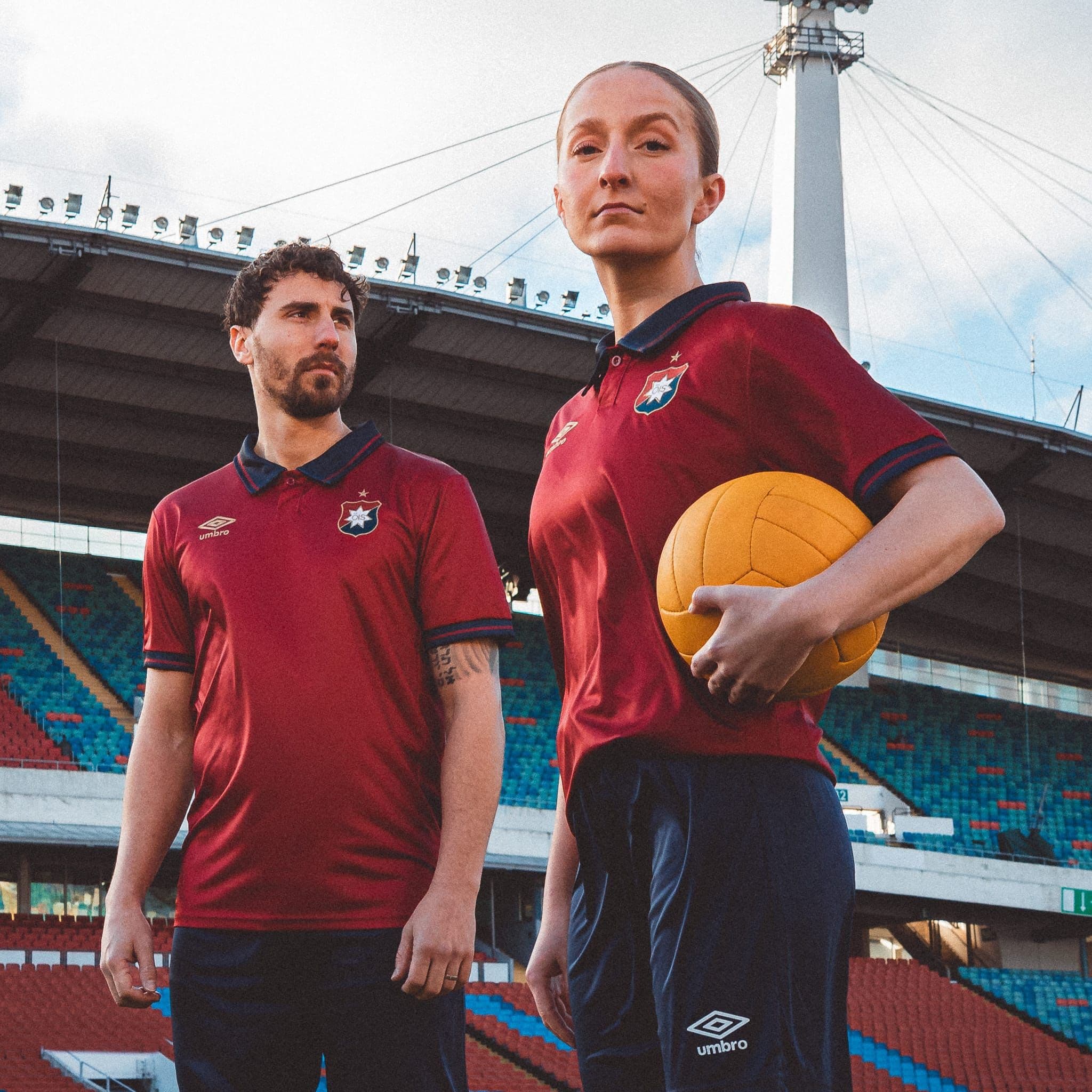
We support children’s and youth sports in Gothenburg—among other initiatives through Hammarviken Arena and Näset Yuncture Arena—to foster community, health, and development for young people.
Volunteering During Working Hours
We offer our employees a number of working days each year to dedicate to voluntary engagement, for example in an organization or association they are passionate about.
Summary – Our Sustainability Commitment
We grow together with our companies—and with our responsibility. Through long-term commitment, transparency, and engagement, we aim to build businesses that make a real difference.
Companies